Village churches
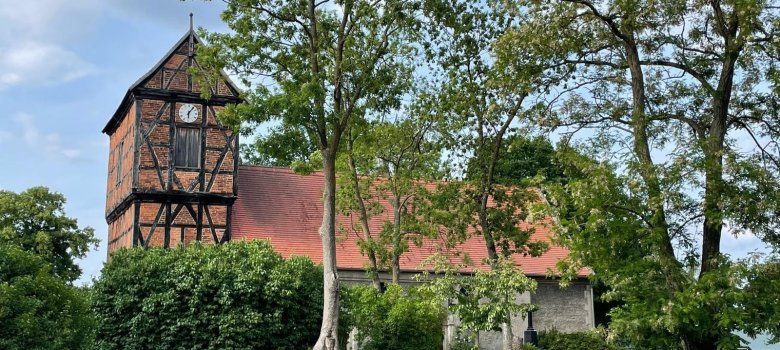
We would like to give you a brief insight with these short descriptions of the churches in the five parishes of our municipality. At the same time, this presentation is intended to encourage you to visit these places yourself and experience the church rooms: marvel at their architecture, listen to the stories behind the stone walls and be inspired by the atmosphere.
Immerse yourself in the tranquillity of centuries-old architecture, discover hidden details, feel the solidarity of the community and gain new perspectives on our regional traditions. We cordially invite you to encounter each church with an open mind - as a place of encounter, remembrance and the immediate present.
Auloses
The simple half-timbered church was consecrated in 1730. With its patron's lodge and baroque pulpit altar, it preserves the image of the time when it was built.
Behrend
The small fieldstone church was probably built between 1200 and 1250. Its tower was only added in 1866/67. The vestry and probably also the apse were added in 1891, which, like the nave, is made of fieldstone.
Boock
In 1893, an elaborate brick building in the neo-Gothic style replaced a medieval fieldstone building. The entire interior of the original building has been preserved almost unchanged.
Bömenzien
Around 1890, a new building was erected in place of an older structure. Only the church tower from the end of the 15th century remained standing. The church consists of a long rectangular nave, transept and chancel with a triangular end. The foundations of the brick tower still contain parts of a fieldstone wall.
Bretsch
Surrounded by a fieldstone wall in the middle of the village, the church was built at the end of the 12th century. The three-part, single-nave structure is made of fieldstone masonry and has pointed arched windows.
German
The neo-Gothic brick church was built in 1885 in place of an old fieldstone church. The imposing building with its rectangular nave, polygonal apse and retracted tower has an impressive length of 23.15 m and a width of almost 10 meters.
Dewitz
The church was built in 1883/84 in the neo-Gothic style. It was built on the foundations of the old church. The interior of the narrow tower is filled with an oak belfry.
Drüsedau
In 1174, a two-part fieldstone building was consecrated by Bishop Walo von Havelberg. According to tradition, it stands on a pagan sacrificial site at the west entrance. The original building underwent several changes.
Single angle
The church is a small medieval fieldstone building, probably from the 12th century. The half-timbered tower was added in 1721. Its roof and the hood of the pretty eight-sided lantern are slated.
Falkenberg
The oldest building (12th century) is the four-part Romanesque church with a mighty fortified tower, which was built partly of brick and partly of fieldstone. The bell tower contains a bronze bell from 1686 with the inscriptions of the patrons, the bell founder, the pastor and the churchwardens. The church and its surroundings are a registered monument, as is the Bülow memorial plaque.
Ferchlipp
The four-part church, a brick building from the 12th century, stands slightly elevated at the western end of the village. The valuable Baroque interior includes the west gallery, which dates back to 1689, and the pulpit altar with its rich carvings, which was made by Michael Helwig in 1721.
Gagel
At the beginning of the 13th century, a three-part Romanesque fieldstone building was built and dedicated to Mary Magdalene. In addition to the main altar, it also had a side altar. In the second half of the 17th century, the Baroque period, the bell storey of the tower was rebuilt in half-timbering. It was demolished again in 1892 and replaced with bricks.
Great Garz
The current brick building of the church was built in the first half of the 13th century. The two half-timbered storeys of the tower were probably added in 1622. The buttresses on the west side of the tower date from the same period.
Heiligenfelde
The single-nave, three-part Romanesque fieldstone church was raised in 1180, although the Gothic baptismal font made of sandstone is dated 1421. With the exception of the east window, all openings were widened in 1685 and 1708 and plastered as late as 1871.
Yeggel
 © Ralf Engelkamp
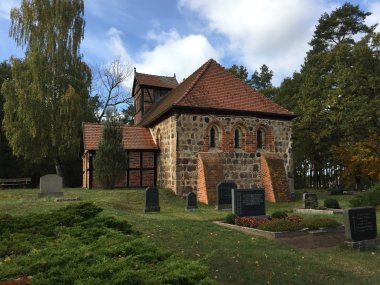
The choir of this church was built at the beginning of the 13th century. In 1727, a new nave was built from brick and the old tower foundation was given an ungrouted timber frame with carved gable mullions.
Kossebau
St. John's Church was built from fieldstone in the middle of the 12th century. The church still has the oldest structure, consisting of a tower, nave, choir and apse. The organ is the showpiece of the church; it was installed in 1893 by the Stendal organ builder Robert Vogt.
Bends
The church was built from fieldstones in the 12th century. The brick tower was added in the 16th century and was not originally planned. The church received its baroque interior in 1747, when the windows were also extended in segments.
Lichterfelde
The nave and choir of the brick church were built between 1250 and 1300. The tower and the south porch were added in the 1600s. The painting cycle was completed in 1484, and the sacristy was probably also added at this time. There is an octagonal sandstone baptismal font in the church dating from 1533.
Lindenberg
A baroque half-timbered church once stood in the middle of the village. In 1893, a church built in the neo-Gothic style was erected at the entrance to the village. The brick building has a rectangular nave with a polygonal apse and a retracted tower, the entire interior of which dates back to the time of its construction.
Losenrade
The Eickerhöfe manor chapel is a simple, unplastered half-timbered building dating from 1708. There is a small half-timbered tower above the west gable. The interior of the chapel is simple and uniform.
Goose
 © Ralf Engelkamp
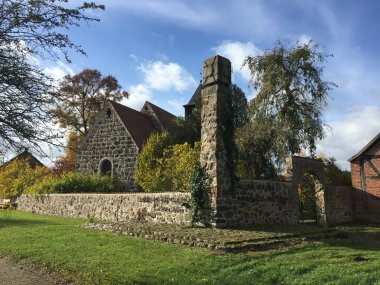
The church was built in the 13th century. Its chancel and nave are made of boulder stone, the material for which probably comes from large boulders from hunebeds in the surrounding area.
Lückstedt
The church was built between 1120 and 1150 from field stones. Extensive repairs and alterations have been made over the years. Instead of the massive west tower, there is now a beautiful walled fieldstone portal. The choir, built around 1905, is covered on the inside with a groined vault.
New churches
Around the middle of the 14th century, an early Gothic brick building was erected in place of the wooden church. Around 1726, it was converted into a baroque hall building by widening the choir. The east wall with three pointed arched windows was preserved. The beamed ceiling inside the church is decorated with Baroque tendril paintings.
Pollitz
The half-timbered tower with its massive ground floor was built in 1741. On the north and south sides, segmental arched windows are walled up. The neo-Gothic brick building dates from 1870 to 1871. On the west side, the round-arched portal was later broken in, above which you can see a sandstone relief with two putti on pilasters, on which the coat of arms of the von Jagow family can be seen.
Priemern
 © Ralf Engelkamp
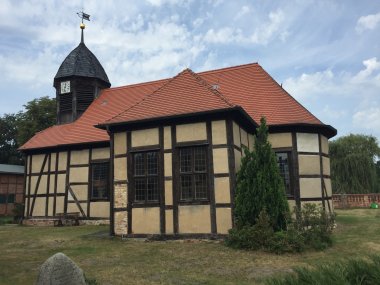
The manor church, probably built in 1810, stands in the middle of the village. The half-timbered church with a seven-sided polygonal end has a hall-like church interior, which is covered with a plastered mirror vault and has rectangular windows with rectangular mullioned windows. The patronage seat is separated from the church by a wooden wall with large windows.
Rathsleben
The church was built in 1828 and is surrounded by a small churchyard with a brick wall on the west side. A square tower with a slender spire was erected above the west side. The interior of St. Lawrence's Church in Rathsleben is simple and has rectangular windows with wooden mullions.
Schönberg
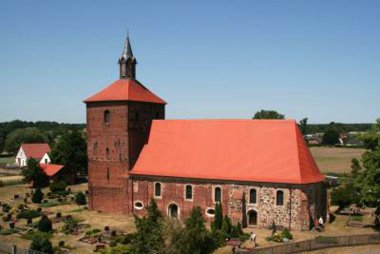
The church, built on a hill, is a Romanesque brick building dating from around 1150. It underwent several changes in the following centuries through additions and alterations. During the Wars of Independence, when the Altmark was still part of the Kingdom of Westphalia, Napoleon had the left bank of the Elbe fortified against the advancing Prussian-Russian armies in 1813. At that time, Schönberg Church was chosen as a base due to its dominant position and was accordingly expanded for defense.
Vielbaum
The church is a fieldstone building whose irregular masonry indicates that it was built in the 12th century. The brick tower was added in the 16th century and was not originally intended. Two bricked-up windows at the west end bear witness to this. A hereditary burial ground was built on the north side around 1702. The church received its baroque interior in 1747, when the windows were also extended in the shape of segmental arches. The church is adorned with two knights' gravestones from the end of the 16th century and two memorial stones with the coat of arms of the von Barsewisch family from the beginning of the 18th century.
Wahrenberg
Located close to the Elbe dyke, the first church was built in the 13th century during the early Gothic period. Extensive alterations were made in the 18th century, which still characterize the shape of the building today. In 1982, the two-storey half-timbered tower with weather vane and the tower roof were repaired.
Wanzer
Wanzer's church is a brick building from the 14th century with extensive alterations in the 16th century. The interior is richly decorated, the carved altarpiece from the 15th century is particularly eye-catching. Other striking details are the paintings on the pulpit and the gallery from the beginning of the 20th century, the renovated stained glass windows (originally from the 15th century), a 19th century organ (unfortunately defective), the stone baptismal font and pews that could tell stories. It stands in the middle of the village, surrounded by a green area and old oak trees. This makes it the focal point not only on the map, but also at most of the festivals that take place around the church. Church services take place alternately with our neighboring villages. Our parish belongs to the parish of Beuster/Krüden, which currently comprises 6 independent parishes, which are looked after by Pastor Roland Jourdan. The parish is presided over by the church council, to which 4 of our fellow citizens and the pastor belong. The maintenance of our church, including the decoration for festive services and guided tours, is due to the efforts of our church council and other citizens. Our cemetery is located outside the village, at the entrance to the village from the direction of Aulosen.
Turning mark
The church, which is essentially early Gothic, was given its current appearance in 1719 when it was rebuilt. The interior decoration, such as the west gallery with the painted half-figures of the 12 apostles and the pulpit, mainly dates from this time. The half-timbered church tower on the west side was not added until 1738. Significant changes were made in the years 1869 - 1870 by enlarging the windows and bricking up the side portals.
Wohlenberg
The simple rectangular fieldstone church stands at the northern end of the village. Judging by the shape of the round-arched windows and portals, the church was built in the second half of the 12th century. The half-timbered tower was added in 1739. In the 18th century, the windows were widened in the shape of a basket arch and the roof was raised.