Hanseatic town of Seehausen (Altm.) and its districts
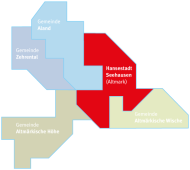
The Hanseatic town of Seehausen (Altmark) was formed on January 1, 2010 from the formerly independent municipalities of Beuster, Geestgottberg, Losenrade and the Hanseatic town of Seehausen (Altmark). On September 1, 2010, the municipality of Schönberg was also incorporated. Together with its districts, the Hanseatic town has a population of around 4,880. This results in a population density of 46 inhabitants per km². Today, the districts of Behrend, Beuster, Eickerhöfe, Esack, Geestgottberg, Hansestadt Seehausen, Losenrade, Oberkamps, Ostorf, Scharpenlohe, Schönberg, Steinfelde, Unterkamps, Wegenitz and Werder belong to the Hanseatic town of Seehausen (Altmark).
Districts
Behrend
The village of Behrend is located about four kilometers from the town of Seehausen, surrounded by a lot of forest and river landscape.
Beuster
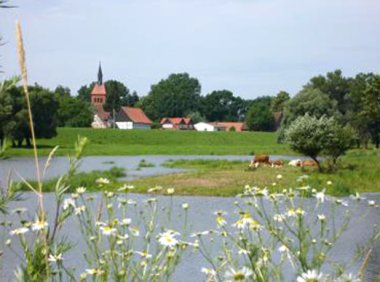
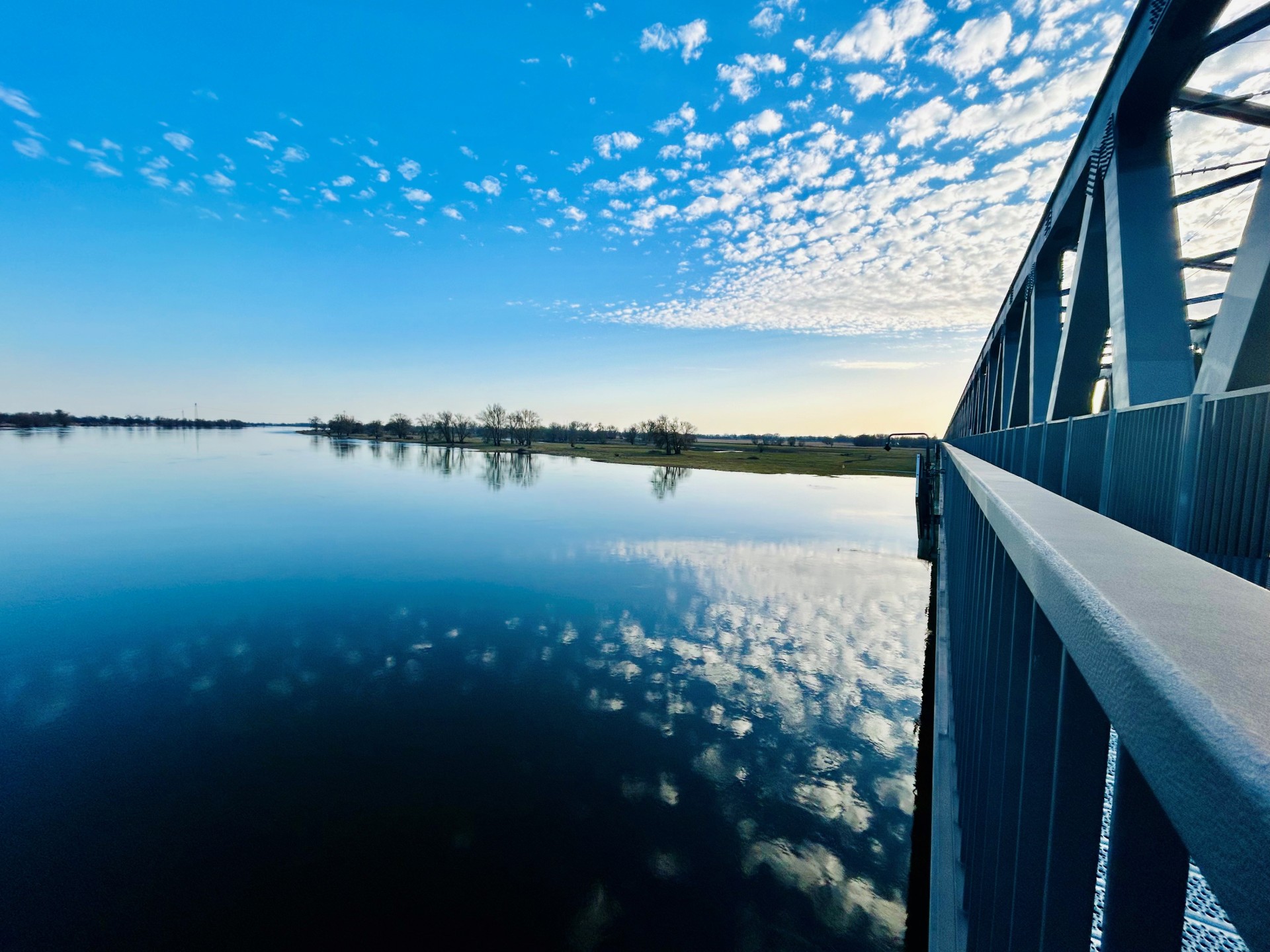
Beuster is located on an oxbow lake of the Elbe. The Elbe forms the border with Brandenburg. Beuster is home to one of the oldest brick churches in the Altmark. Beuster also offers all nature lovers a wide expanse of countryside with picturesque spots for hiking, exploring and lingering.
Eickerhöfe
The district is located between the towns of Seehausen (Altmark) and Wittenberge in Brandenburg. The Aland-Elbe-Niederung nature reserve begins here.
Esack
A small district with around 70 inhabitants located northeast of the Hanseatic city of Seehausen. Near the village is a small lake, the Kleine Wehl. It was created during a breach in the Aland dyke.
Geestgottberg
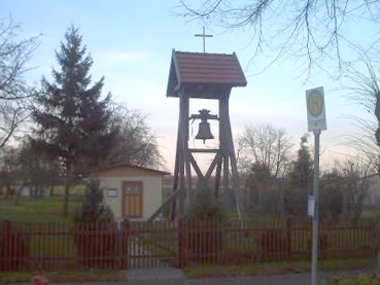
The village of Geestgottberg lies between the Elbe and Aland rivers. Geestgottberg still has the scattered location typical of the Wische with farms in individual locations. The village is well connected by the B 189 and the railroad line. Geestgottberg is surrounded by a meadow and river meadow landscape with high recreational value for nature lovers. The village is home to a family-run farming and fishing business.
Hanseatic city of Seehausen
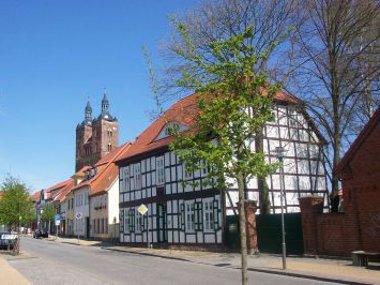
The town was probably founded by Dutch colonists who were brought to the area to dike the Elbe. Seehausen was first mentioned in documents in 1174. It belonged to various medieval town alliances, including the Hanseatic League, and is now located on the Romanesque Road.
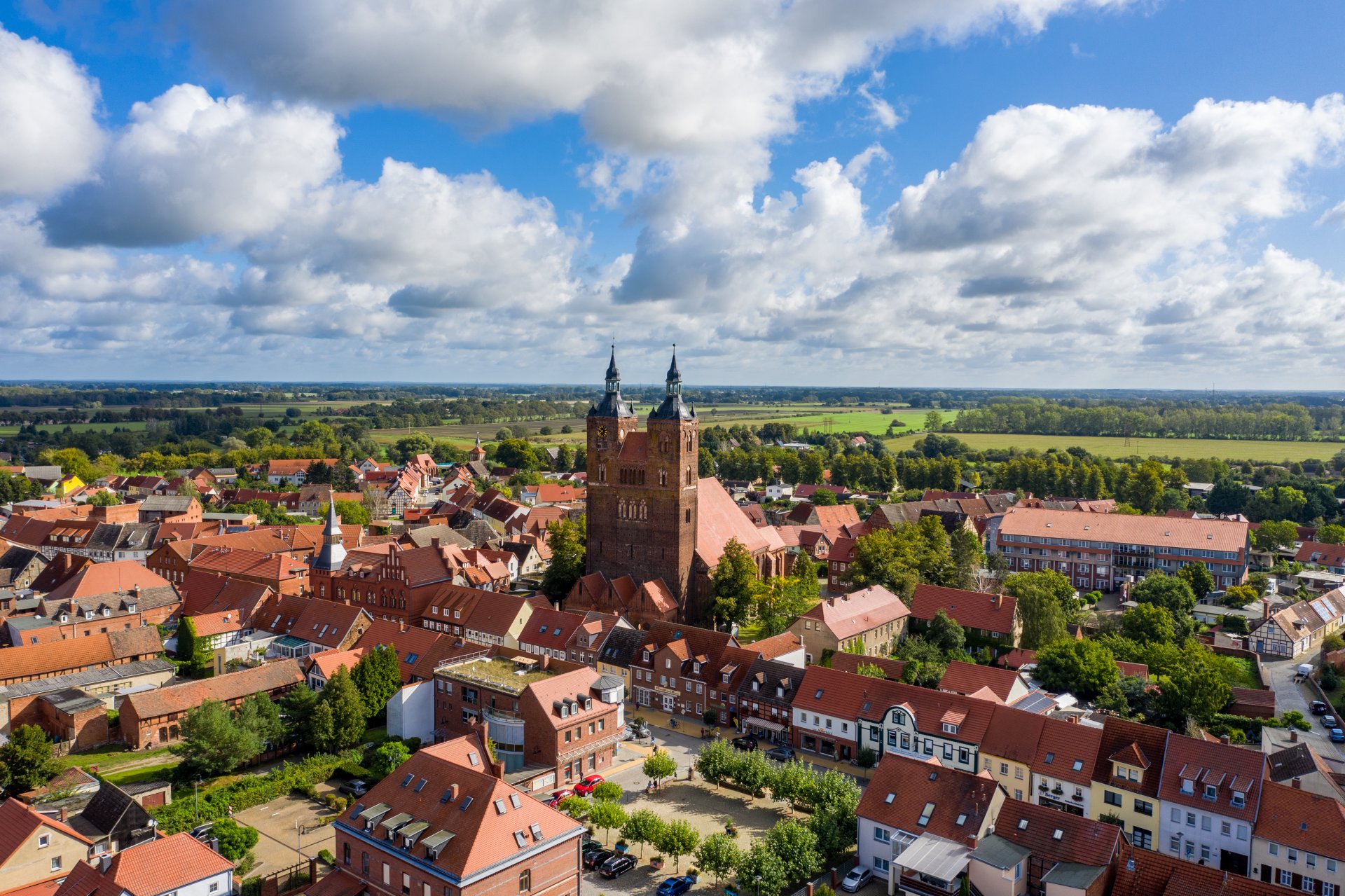
In the town's landmark, St. Peter's Church, built between 1180 and 1220, visitors will find one of the most beautiful Romanesque brick portals in northern Germany, as well as a richly decorated winged altar. The high altar is a masterpiece of carving and painting, which was created in a Dutch artist's workshop and depicts the Passion of Christ. The two 65-metre-high towers tower far above the city and can be climbed.
The remains of the old town wall and the Beustertor, the only surviving gate of the original four town gates, are reminders of the former town fortifications. The neo-Gothic town hall was built between 1883 and 1884. Its beautiful façade is still a jewel of the town today.
From 1743 to 1748, the antiquarian Johann Joachim Winckelmann taught as vice-principal at the former Latin school in Seehausen. This was located in a building opposite St. Peter's Church. Today, the Seehausen Community School bears his name in his honor.
The Schillerhain, a park with mature trees and quiet paths, is a green oasis right on the Aland. Embedded in this relaxing park is the Waldbad with great bathing opportunities, a well-kept outdoor area and catering facilities.
Only 3 km away on foot, in the hilly Seehäuser Forest, lies the old forester's lodge "Barsberge", today a popular destination for excursions. It can be reached by bike, on foot or by car on paths through the forest. Up here under tall trees you will find a small historical burial site of former foresters and another special feature - the dog cemetery, which has existed since 1887.
Losenrade
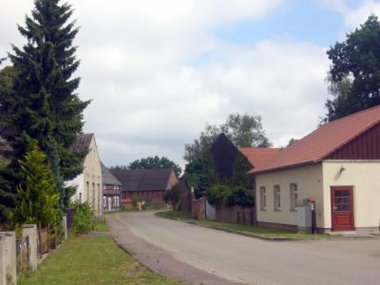
Losenrade is located in the far north of the district of Stendal. The Elbe forms the state border with Brandenburg and the town of Wittenberge. The village is home to an organic farm with dairy cows that graze all year round. Losenrade's women's fire department is also worth mentioning. They were Saxony-Anhalt state champions in 2015.
Oberkamps
Oberkamps is a small district with only around 30 inhabitants, located close to the Elbe and the Brandenburg state border.
Ostorf
Ostorf is located a few kilometers northeast of the Hanseatic town of Seehausen. There is a dairy farm in the village.
Scharpenlohe
The village of Scharpenlohe is located on the Elbe River in the Aland-Elbe-Niederung nature reserve on the border with Brandenburg. Only four people currently live in the smallest district of the Hanseatic city of Seehausen (Altmark) (as of 2021).
Schönberg
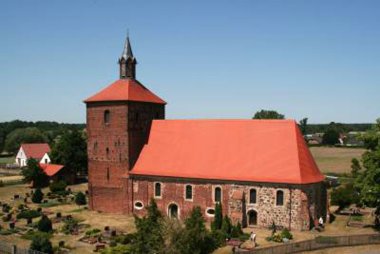
Located between the towns of Seehausen and Werben, Schönberg forms the border to the "Wische". The Elbe cycle path, which leads from Cuxhaven via Dresden to the Czech Republic, can be reached directly by bike.
Steinfelde
Steinfelde is a small village located a few kilometers north of Seehausen.
Unterkamps
Unterkamps is a small village to the north of the Hanseatic city. Only around 15 inhabitants live here.
Wegenitz
With just over 10 inhabitants, Wegenitz is one of the smallest districts in the Hanseatic town of Seehausen.
Werder
The special feature of this small town is its island location between the Elbe and the Alte Elbe.