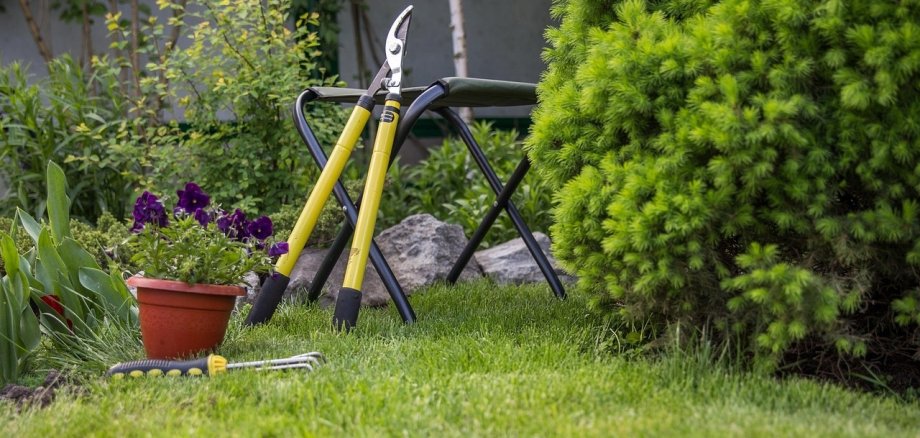
From February 1 to March 15, it is permitted to burn plant-based garden waste on the garden property where it was produced. This includes areas used for gardening on residential properties or allotments. During this period, a small fire may be burned only once on either Wednesdays or Saturdays between 9:00 a.m. and 6:00 p.m., except on public holidays. The burning process must be completed within two hours. Only waste that comes from horticultural soil and cannot be composted or recycled in any other way and/or that contravenes the principles of plant protection (phytosanitary reasons) and the common good may be burned.
The burning of plant waste from and in industrial and commercial areas, agricultural and forestry businesses, gardening businesses, as well as waste produced during water and road maintenance measures or during the maintenance of green spaces and parks is not permitted.
The following minimum distances must be observed when burning:
- 5 m from buildings and property boundaries, pipes, and other flammable or hazardous items
- 100 m to hospitals, nursing homes, schools, kindergartens, public playgrounds
- 30 m to forest as defined by the State Forest Act
Burning may only take place in compliance with the following regulations:
- The amount of waste to be burned must not exceed a base area of 1.5 m x 1.5 m and a height of 1 m.
- Garden waste that has been stored temporarily (for more than a week) must be moved immediately before burning so as not to endanger any animals hidden underneath.
- Plant waste (dry plants, woody plant parts such as tree, shrub and hedge cuttings, perennials, herbaceous plant parts such as asparagus, tomato and potato haulm, plants that must be incinerated for phytosanitary reasons) may only be incinerated on the land on which they accumulate or have accumulated.
- Burning is not permitted in winds from wind force 6 (branches move significantly, leaves and paper are lifted from the ground), high humidity, lack of air mass exchange (inversion weather conditions) and fog.
- Burning is not permitted during prolonged, extremely dry weather (when forest fire warning levels 3 and 4 have been triggered).
- No domestic or commercial waste, petroleum products, chemicals, tar or rubber materials, coated wood or wood treated with protective agents, etc. may be used to light or support the fire.
- When burning, the fire must be kept under the constant supervision of a suitable adult. Heavy smoke development and flying sparks that lead to a considerable nuisance or danger to the general public, in particular to the neighborhood or to traffic obstruction, must be avoided. If these occur, immediate measures must be taken to prevent them and, if necessary, the fire must be extinguished.
- Suitable equipment must be available to fight the fire so that it can be extinguished immediately in the event of danger (e.g.: spade, shovel, extinguishing water).
- Do not leave the combustion site until the fire and embers have gone out. The combustion residues must be worked into the ground immediately or disposed of properly.
Exceptions to the above-mentioned regulations must be applied for from the waste authority of the district of Stendal if the relevant requirements are met. The granting of an exemption is subject to a fee.
Violations constitute administrative offenses punishable by fines of up to EUR 100,000.00.